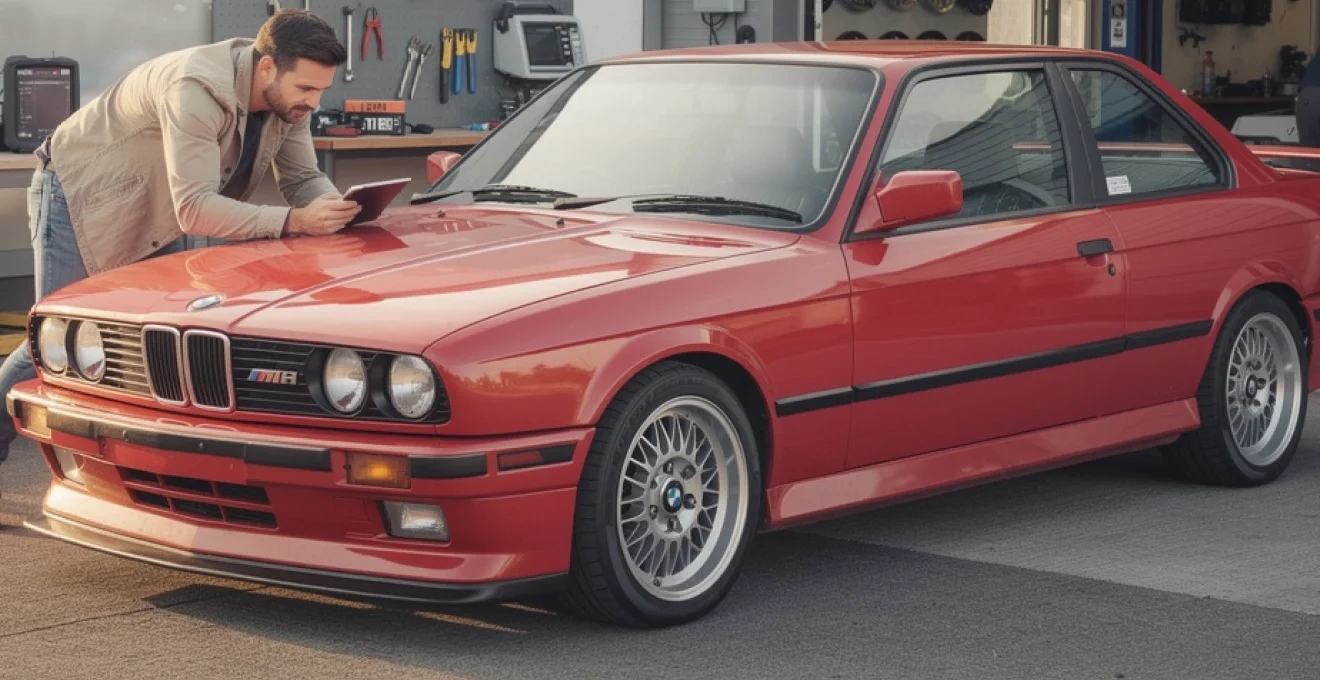
The BMW E30 325i sits in a sweet spot between usability, motorsport heritage and rising classic status. Values have jumped 30–60% across Europe in the last five years, yet the car remains one of the most rewarding ways to experience an analogue, rear-wheel-drive BMW. If you are searching for a BMW E30 325i for sale in the UK or Europe, the challenge is no longer just finding one; the challenge is finding the right one at the right price, in the right spec, and with paperwork that stands up to scrutiny. Understanding the market, using the best platforms, and knowing how to inspect a car will put you in a far stronger position than simply scrolling classifieds at random.
Understanding the BMW E30 325i market: UK vs EU supply, pricing trends and collector demand
The BMW E30 325i market has become increasingly international. UK cars, especially late 325i Sport models, are now attracting buyers from mainland Europe, while UK enthusiasts source rust-free E30s from Germany, the Netherlands and southern Europe. In the UK, you will typically see usable 325i saloons and coupes from around £15,000, with very tidy examples around £20,000–£30,000 and concours or very low-mileage cars edging beyond £35,000. Across Europe, asking prices in euros can appear higher, but the availability of better-preserved shells often offsets import and registration costs.
Collector demand is strong because the 325i offers many of the driving qualities associated with the E30 M3, but with lower running costs and a smoother straight-six engine. Auction data from 2023–2024 shows a consistent sell-through rate of 80%+ for clean 325i Sports on enthusiast platforms, while the number of rough cars has dropped as more have been broken for parts or turned into track tools. The result is a tightening supply of honest, original BMW E30 325i examples that still make sense as both an enjoyable classic and a medium-term investment.
Right-hand drive vs left-hand drive BMW E30 325i: implications for value, usability and resale in the UK
In the UK, RHD BMW E30 325i cars traditionally command a premium because of everyday usability and perceived originality for this market. That said, LHD imports are gaining acceptance as more enthusiasts prioritise condition over steering side, especially for second or third cars used mainly on weekends or at track days. If you plan to sell within the UK, expect a well-sorted RHD car to be easier to move on and to attract more casual buyers.
However, LHD BMW E30 325i imports from Germany, Italy or Spain often have superior bodywork thanks to milder climates and more cautious winter salt use. For someone planning touring across Europe, a LHD 325i can actually be more practical. Resale values depend heavily on documentation, originality and quality of the conversion if any steering swap has been done. A converted shell (RHD to LHD or vice versa) usually sits in a lower value bracket because of the complexity and difficulty of verifying the work. From a usability perspective, lane positioning and overtakes take a little adaptation, but most enthusiasts adjust within a few hundred miles.
Pre-facelift vs facelift BMW E30 325i (1985–1987 vs 1988–1991): model-year differences affecting desirability
Pre-facelift BMW E30 325i models (often called chromies) were built roughly between 1985 and 1987 and have chrome bumpers, early-style rear lights and some different trim options. Facelift cars from 1988 onwards introduced plastic bumpers, updated lighting and interior tweaks, while engine output and basic mechanicals remained broadly similar. Enthusiasts often prefer the later cars for daily usability and more modern looks, but early pre-facelift cars retain a certain period charm and can be rarer in original condition.
From a value perspective, late-model 325i Sport with M-Tech II body kit almost always command the highest prices, especially if they have original options like LSD, air conditioning and factory Shadowline trim. Pre-facelift cars can be an opportunity if you like the more classic aesthetic and are comfortable with more limited availability of some trim parts. When you look at a 325i for sale, checking build date, option codes and whether the body kit is factory or retrofitted is essential for judging where it sits in the desirability hierarchy.
Impact of mileage, service history and originality on BMW E30 325i price brackets
Mileage on its own is a blunt instrument. A 325i with 190,000 miles but meticulous service history, thick paperwork and recent restorative work can be a better buy than a 90,000-mile car with patchy maintenance. That said, the market does respond to odometer readings: under 80,000 miles usually pushes a car into the top price bracket, while anything beyond 150,000 miles speeds up the conversation about engine refreshment, suspension overhaul and interior retrimming.
Originality is where collector demand increasingly concentrates. Factory colours, original M-Tech kits, correct M20B25 engine, matching numbers on VIN and drivetrain and period-correct interiors all add value. Light, reversible upgrades (suspension refresh, stainless exhaust, BBS wheels) are generally accepted, but heavy modifications can slice 20–40% off the price compared with an equivalent stock example. A fully stamped service book, backed by MOT certificates and invoices, goes a long way to justify a stronger asking price when you find a BMW E30 325i for sale.
UK market hotspots for BMW E30 325i sourcing: london, birmingham, manchester, glasgow and online hubs
Big urban areas such as London, Birmingham, Manchester and Glasgow historically had higher new-car sales, so more E30 325i cars were originally registered there. Today, many have migrated to surrounding counties as second cars or weekend classics. London and the South East tend to show the highest asking prices but also the broadest choice, including specialist dealers and restored examples. The Midlands and North West often provide better value, especially for project cars and drivers rather than concours builds.
Beyond geography, online hubs now define the real hotspots. Search alerts on enthusiast platforms and classifieds capture cars nationwide the moment they are listed. As more E30 325i owners use online auctions for maximum exposure, being ready with finance, inspection options and transport quotes gives a serious advantage. Having a shortlist of UK regions you are prepared to travel to, combined with fast responses to promising adverts, often makes the difference between securing a good car and missing out.
Best online platforms to find a BMW E30 325i for sale in the UK and europe
Online platforms dominate the modern hunt for a BMW E30 325i, but not all sites serve the same purpose. Some are best for curated, enthusiast-owned examples; others excel at uncovering hidden project cars that rarely reach mainstream classifieds. Using several platforms in parallel increases the number of cars you see and reduces the risk of overpaying through a single channel. It also helps you benchmark what £15,000, £20,000 or £30,000 actually buys across different regions and conditions.
Using auto trader, PistonHeads and car & classic advanced filters for BMW E30 325i searches
Auto Trader, PistonHeads and Car & Classic remain among the most efficient tools for narrowing down a BMW E30 325i search. Auto Trader’s filters allow you to specify fuel type, body style, mileage brackets and price ceilings, while PistonHeads often attracts enthusiast-owned cars with detailed descriptions. Car & Classic offers classic-focused adverts and auctions, making it easier to filter out modern vehicles and concentrate purely on older BMW stock.
Advanced filters such as manual vs automatic, coupe vs convertible, and search radius help focus results. Saved searches and email alerts are extremely valuable because desirable E30 325i Sports often sell within days. When you see detailed descriptions mentioning factory options, option codes, known rust repairs and MOT history, it usually signals a seller who understands the car—ideal if you value transparency and accurate representation over vague, shortened listings.
Leveraging ebay motors and facebook marketplace for barn finds, non-runners and project BMW E30 325i cars
eBay Motors and Facebook Marketplace can feel chaotic, but they are powerful tools for finding BMW E30 325i project cars, barn finds and shells. Many sellers prefer these platforms for quick listings, local sales or vehicles that need work and therefore may not fit neatly into traditional dealership adverts. Search terms like “spares or repair”, “non-runner”, “drift project” or “barn find E30” can reveal cars that never reach the frequent Auto Trader or PistonHeads audience.
The trade-off is higher risk. Short descriptions, limited photos and vague answers to questions are common. For you as a buyer, that means more due diligence: requesting additional pictures of common rust areas, asking for VIN numbers and checking if the car is recorded as Cat C/D/S/N, and confirming whether the logbook (V5C) is present. For the right person, these rougher BMW E30 325i for sale can be a cost-effective entry point into ownership or a solid base for a track build.
European BMW E30 325i hunting on mobile.de, autoscout24 and leboncoin for rust-free imports
For a broader supply of BMW E30 325i cars, European platforms such as Mobile.de, Autoscout24 and Leboncoin are invaluable. Mobile.de and Autoscout24 cover Germany, Austria, the Netherlands and beyond, while Leboncoin is particularly strong in France. Prices for high-grade cars can look steep—€25,000–€45,000 for restored, low-mileage or special models is no longer unusual—but body condition and originality often exceed what is typically found in the UK.
Many of these platforms allow filtering by first registration date, mileage, transmission, and even specific engine types like 325i. When evaluating a potential import, always budget for transport (typically £800–£1,500 depending on distance and method), UK registration fees and potential VAT or duty depending on post-Brexit rules. Using a local inspector or a BMW specialist in the seller’s country can prevent expensive surprises such as hidden accident damage or poorly repaired rust.
Specialist BMW forums and communities: E30Zone, BMW car club GB and bimmerforums classified sections
Dedicated BMW communities are often where the best cared-for BMW E30 325i cars change hands. E30Zone in the UK, BMW Car Club GB members’ adverts, and international forums like Bimmerforums host classified sections that tend to feature cars with known histories. Owners active on these forums usually document restoration work, upgrades and trackdays with build threads and photos, providing a richer picture than a brief classified description alone.
Forum listings often include technical detail such as option codes, recent parts replaced and known issues still requiring attention. That transparency is invaluable when you are weighing up a car’s true value. It is not unusual to see long-standing members selling to fund another project, sometimes at fair prices that reflect the desire for a straightforward sale to another enthusiast rather than maximising profit through a dealer or public auction.
Monitoring auction platforms: collecting cars, the market by bonhams and iconic auctioneers for BMW E30 325i lots
Online auction platforms such as Collecting Cars, The Market by Bonhams and Iconic Auctioneers have become key reference points for BMW E30 325i values. Detailed photo sets (often 200+ images), walkaround videos and comment sections where bidders ask questions provide a transparent window into each car’s condition. Sell-through statistics from 2023 show strong clearance rates for E30s, especially clean 325i variants with sensible mileage and good provenance.
For a buyer, auctions require discipline. Setting a maximum bid including buyer’s fees, transport and immediate recommissioning work prevents emotional overspend. On the positive side, auction histories help benchmark the market; tracking several 325i sales over six to twelve months gives you a data-backed sense of what different specs and conditions actually achieve in real transactions, not just asking prices.
Targeting specific BMW E30 325i variants: SE, sport, touring, convertible and motorsport-inspired builds
The BMW E30 325i range is far from a one-size-fits-all proposition. Body style, trim level and period options create several sub-markets, each with its own following and price logic. A 325i SE automatic saloon, for instance, sits in a very different niche from a 325i Sport manual coupe or a low-mileage Convertible. Clarifying which variant matches your usage—daily driving, weekend trips, trackdays or long-term collecting—saves wasted journeys and misaligned expectations when browsing BMW E30 325i for sale adverts.
Identifying genuine BMW E30 325i sport models: M-Tech I and M-Tech II body kits, LSD and suspension codes
Genuine 325i Sport models are among the most sought-after non-M E30s. Early cars carried the M-Tech I body kit, later ones the M-Tech II package with deeper bumpers and side skirts. From the factory, these cars typically came with sports suspension, limited slip differential, close-ratio gearbox and often Shadowline trim. Because M-Tech parts can be retrofitted, verifying authenticity matters.
Key steps include checking the VIN against BMW build data, looking for option codes such as 0335 (M Technic Sport Package), 0209 (limited slip differential in some markets) and 0704 (M-Sport suspension), and confirming details like correct interior trim and steering wheel. An honest Sport with full documentation commands a notable premium, frequently 20–40% above an equivalent non-Sport car, so these checks protect your budget as much as your pride.
BMW E30 325i SE vs base model equipment: on-board computer, electric windows and interior trim packages
The 325i SE (Special Equipment) bridged the gap between base models and full-blown Sport variants. Typical SE features included electric front windows, an on-board computer (OBC), higher-grade interior trim and sometimes options like air conditioning, sunroof and upgraded audio. For many buyers, an SE offers an ideal combination of comfort and classic appeal without the premium Sport badge commands.
When weighing up SE vs base models, consider both running costs and long-term desirability. Electric windows, sunroof mechanisms and OBCs introduce extra points of failure, but they also add to everyday comfort and perceived spec richness. In the current market, a well-specified SE with good history regularly outprices a sparse base model, especially among buyers planning longer trips rather than purely track-focused use.
BMW E30 325i touring and convertible buying nuances: tailgate corrosion, hood mechanisms and chassis rigidity
The 325i Touring and Convertible bring extra character but also extra inspection points. Tourings are practical and relatively rare in 325i form; the main structural concern is corrosion around the tailgate, rear inner arches and boot floor, areas often neglected during previous repairs. Check that the tailgate drains are clear and that there is no evidence of water ingress into the boot carpet or rear quarter panels.
Convertibles expose additional challenges. Hood mechanisms and fabric condition can change the economics of a purchase, with new hoods and frames costing into the low four figures if everything needs overhaul. Chassis rigidity is lower than on coupes, so look closely for signs of flex or previous accident damage, particularly at the front and rear sills, floorpans and jacking points. Convertible 325i models remain highly desirable in strong colours with leather interiors and manual gearboxes, but body condition must always come first.
M20B25 engine-swapped BMW E30 shells and 2.7 “eta” stroker builds: valuation and documentation checks
Engine-swapped E30s are increasingly common, from straight M20B25 conversions into lower-spec shells to 2.7 “eta” stroker builds and more radical swaps. These cars can offer thrilling performance and a bespoke character, but valuation becomes more subjective. For many collectors, a non-original engine removes the car from the top investment tier, putting it instead into an enthusiast or track-focused price band.
If you consider a swapped or stroker BMW E30 325i for sale, documentation is crucial. Look for invoices for machining, parts and mapping, check that the conversion is declared to insurers, and confirm the engine number recorded with the DVLA matches what’s in the bay. Professionally executed builds with full paperwork can still be excellent buys, especially if your goal is driving enjoyment over concours originality.
Inspecting a BMW E30 325i before purchase: technical checks, rust hotspots and mechanical diagnostics
An in-person inspection remains the most powerful tool you have when assessing a BMW E30 325i. Photos can flatter, but rust, poor repairs and mechanical neglect always reveal themselves up close. A structured approach—body and chassis first, then engine, drivetrain, suspension, electricals and finally documentation—reduces the chances of overlooking expensive faults. Given that a full restoration can easily exceed £20,000 in today’s labour and parts costs, spending a few hours on detailed checks is essential risk management.
Bodywork and chassis inspection: rust-prone areas on BMW E30 325i (sills, scuttle, jacking points, inner arches)
Body condition is the number one value driver. The E30 shell is robust, but three decades of British and northern European weather have taken a toll. Priority rust areas include sills, especially near jacking points, inner front wings, scuttle panel beneath the windscreen, boot floor, rear inner arches and around the fuel filler. Lift carpets in the boot and cabin where possible to look for crusty seams or fresh underseal hiding questionable metal.
Pay particular attention to MOT advisories mentioning welding to sills and floorpans. A few small repairs, done well and documented, are acceptable. Extensive patches, poorly dressed welds and misaligned panels are warning signs of either accident damage or corner-cutting restoration. A straight, largely original shell with honest paint imperfections is almost always better than a newly painted car with questionable structural work underneath.
M20B25 engine assessment: timing belt history, oil leaks, head gasket signs and idle instability
The M20B25 straight-six is widely respected for its character, but it relies on correct maintenance. Timing belt replacement intervals are typically every 4 years or 60,000 miles; lack of proof is a strong negotiation point because a belt failure can destroy the top end. Check for oil leaks around the cam cover, front crank seal and sump gasket, and inspect coolant for contamination that might hint at head gasket failure.
On start-up, the engine should fire easily and settle into a relatively smooth idle once warm. Hunting, misfires or stalling can indicate issues with idle control valves, vacuum leaks or ageing sensors. During a road test, watch for strong, linear pull through the rev range and an absence of blue smoke on acceleration or overrun. A compression test and leak-down test, ideally performed by a specialist, provide extra reassurance on higher-mileage examples.
Drivetrain and suspension verification: getrag 260 gearbox, differential noises, propshaft and bush wear
The standard manual gearbox on most 325i models is the robust Getrag 260. On test, it should shift cleanly without crunching into second or third gear, common signs of synchro wear. Some drivetrain whine is acceptable on older cars, but loud howling from the differential or clunks when applying and releasing throttle can mean worn diff bearings or excessive backlash. Rebuilds are possible but not cheap, so factor that into any project.
Suspension and bush wear is almost guaranteed on unrestored cars. Listen for knocks over bumps, inspect rear subframe bushes for cracking, and look for uneven tyre wear that may suggest tired dampers or misalignment. Many enthusiasts refresh the entire suspension—bushes, control arms, dampers and springs—as a first step after purchase. That investment can transform how a BMW E30 325i drives and protect against further wear in associated components.
Electrical system and interior audit: SI board, OBC, electric windows, sunroof and instrument cluster faults
E30 electrics are straightforward by modern standards but not immune to age. The Service Indicator (SI) board within the instrument cluster can fail, causing dead rev counters or erratic service lights. Rebuilt SI boards are available, but cluster removal is a bit more involved than a quick driveway fix. Test all instruments, warning lamps and the OBC for proper function during your inspection.
Electric windows and sunroofs should move smoothly without straining motors or sticking. Slow operation often points to dried guides or tired motors; total failure suggests broken switches, wiring or motors that need replacement. Check heater blower operation at all speeds; blowers that only work on full power indicate resistor pack issues, a common but fixable fault. Interior condition—seats, dash cracks, sagging headlining—also affects value, as quality retrimming can be surprisingly expensive.
For any 30+ year-old BMW, a fully functioning interior and electrical system signals careful long-term ownership and increases confidence in the car as a whole.
Verifying originality: VIN decoding, build sheets, BMW dealer stamps and matching-numbers components
Authenticity plays a major role in the long-term appeal of a BMW E30 325i. Start with the VIN on the scuttle and compare it to door jamb stickers, service book and logbook. Online VIN decoders reveal original paint colour, engine type, transmission and option codes, allowing you to cross-check against what you see in person. For instance, a car claiming factory M-Tech but lacking code 0335 in its build sheet deserves further questioning.
Matching-numbers status for engine and, where possible, gearbox enhances value. BMW dealer stamps in the early years, followed by specialist stamps, build a compelling story of proper care. Gaps in history are not necessarily a deal-breaker, but substantial documentation—MOT history, major parts invoices, alignment reports—helps justify any premium the seller asks. In a growing collector market, strong paperwork is almost like a second chassis: it underpins everything else.
Finding BMW E30 325i project cars, shells and track-focused builds
Not every buyer wants a pristine, low-mileage 325i. For some, the goal is a stripped, caged track car, an engine-swapped drift build or a full nut-and-bolt restoration. Project BMW E30 325i cars occupy their own subset of the market, often advertised with phrases like “spares or repair”, “no MOT” or “ideal drift base”. Prices swing wildly depending on shell condition, roll cage quality, engine state and parts included.
Locating non-running and spares-or-repair BMW E30 325i through breakers, back-street garages and scrapyards
Breakers, independent garages and even old-school scrapyards remain overlooked sources of E30 shells and non-runners. Many garages have cars that were never collected after big repair quotes, or projects that stalled years ago. A polite visit, asking if any old BMW E30 325i is tucked away out back, can occasionally uncover a car that has not yet made it online. Local word-of-mouth, especially among BMW specialists, is another route to these “offline” finds.
When you do find a non-runner, assume the worst until proven otherwise. Seized engines, missing radiators, cut looms and half-fitted suspension components are common. Your assessment should focus heavily on shell integrity and completeness of hard-to-source parts (interior trim, glass, specific brackets). In many cases, the donor value of these parts alone can justify a low purchase price, even if the car eventually becomes a long-term restoration.
Identifying ex-track and drift BMW E30 325i builds: cage installation, welded diffs and cut arches
Ex-track and drift BMW E30 325i builds are easy to spot once you know the signs. Look for roll cages (bolt-in or weld-in), bucket seats on aftermarket rails, stripped interiors, hydraulic handbrakes, welded or plated differentials and aggressively cut or rolled arches. These modifications can make an E30 sensational on circuit, but they also reduce comfort and often remove the car from mainstream collector interest.
Quality of execution matters. Professionally installed cages with correct foot plates and documentation from a reputable fabricator are a huge plus if you plan to continue track activity. In contrast, home-brew welds, crudely cut arches and poorly routed fuel or brake lines increase both risk and rectification cost. If you are tempted by a cheap ex-drift 325i, carefully weigh the cost of reversing modifications or refreshing safety-critical parts.
Assessing the feasibility of restoring heavily modified or engine-swapped BMW E30 325i examples
Restoring a heavily modified E30 back to near-original spec can be rewarding but is rarely the cheapest option. Sourcing correct interior trim, factory suspension, original-type engines and period audio equipment soon adds up. In many cases, buying a more original starting point—even at a higher initial cost—proves more economical than undoing years of custom work. Think of it like renovating a listed building versus a standard 1960s house: every non-original detail may need careful, costly correction.
However, if you admire the modifications or plan to keep the car long term, a well-built engine-swapped or track-focused BMW E30 325i can deliver outstanding driving enjoyment. The key question is whether the car’s current specification aligns with your usage and budget. A pre-purchase inspection from a BMW specialist familiar with modified E30s is strongly recommended to highlight any safety or reliability risks before you commit.
Working with BMW specialists, dealers and importers to source a BMW E30 325i
For many enthusiasts, partnering with a BMW specialist or importer is the most time-efficient path to a high-quality BMW E30 325i. Instead of sifting through hundreds of marginal adverts, you tap into curated stock, trade networks and deep technical know-how. Professional outfits often see cars long before they hit public market and can advise you candidly on whether a particular 325i suits your aims and budget. Recent years have seen a rise in commission-based sourcing and import services tailored to classic BMWs.
Using independent BMW specialists and classic dealers: munich legends, classic heroes and similar outfits
Independent BMW specialists and classic dealers such as Munich Legends, Classic Heroes and comparable firms across the UK and Europe focus on high-quality, well-documented cars. Their asking prices can be higher than private sales, but they usually reflect thorough preparation: paint correction, mechanical servicing, fresh MOT and often a short warranty. For someone short on time or wary of DIY inspections, this can be a logical route into E30 ownership.
A car supplied by a respected specialist often carries an invisible premium: the dealer’s reputation is effectively backing the vehicle’s history and condition.
These businesses also offer long-term support—parts sourcing, future upgrades, rolling restoration work—which is invaluable if you intend to keep the car for many years. Building a relationship with such a specialist can even give early access to customers’ part-exchange vehicles before they are widely advertised, a subtle but real advantage in a tightening BMW E30 325i market.
Commission-based BMW E30 325i sourcing services and buyer’s agents in the UK and EU
Buyer’s agents and commission-based sourcing services act as personal shoppers for classic cars. You define a brief—budget, body style, transmission, colour preferences, level of originality—and the agent searches across the UK and Europe, including private collections and trade-only channels. Fees are typically a percentage of the purchase price or a fixed commission, but in return you benefit from expert eyes, negotiation skills and logistics coordination.
This approach suits buyers looking for specific or rare configurations, such as a late E30 325i Sport in a particular colour or a rust-free Touring. A good agent will provide inspection reports, photo sets and honest recommendations, including advising against a car if it does not stack up. As the market matures and quality cars become harder to find, these specialist services have moved from luxury to practical tool for serious enthusiasts.
Evaluating japanese and european imports: rust protection, undersealing and paperwork validation
Japanese and European imports broaden the pool of available BMW E30 325i examples. Japanese-market cars often show extremely low mileage and superb interiors, but underbody corrosion can still be present, particularly if undersealing was applied later in life. European imports from Germany, Italy, Spain and the Netherlands vary, with northern climates closer to the UK in salt usage, and southern climates generally kinder to bodywork.
Key checks include professional underbody inspections to look for hidden rust beneath old underseal, verification of export and import paperwork, and consistency between foreign registration documents and current UK V5C details. Mileage verification can be more complex overseas, so rely on service records, inspection stickers, and condition cues rather than odometer figures alone. If in doubt, a detailed pre-purchase inspection by a BMW specialist is worth every penny.
Budgeting for pre-purchase inspections, transport and registration of imported BMW E30 325i cars
Buying a BMW E30 325i from abroad introduces additional cost layers beyond the hammer price or agreed sale figure. Pre-purchase inspections by local specialists typically range from €250 to €600, but can save thousands. Transport within Europe usually costs between £800 and £1,500 depending on country and whether the car travels on an open or enclosed transporter. Once in the UK, you will face DVLA registration fees, possible NOVA declarations and, where applicable, VAT or duty.
Allowing a contingency of 15–25% above the car’s price for all import-related expenses is a sensible rule of thumb. This buffer should also include immediate recommissioning costs: fluids, belts, tyres, brake refresh and any urgent rust prevention work. Approaching the purchase with a fully costed plan, rather than focusing solely on the headline price, makes owning and enjoying a BMW E30 325i far more satisfying in the long run.