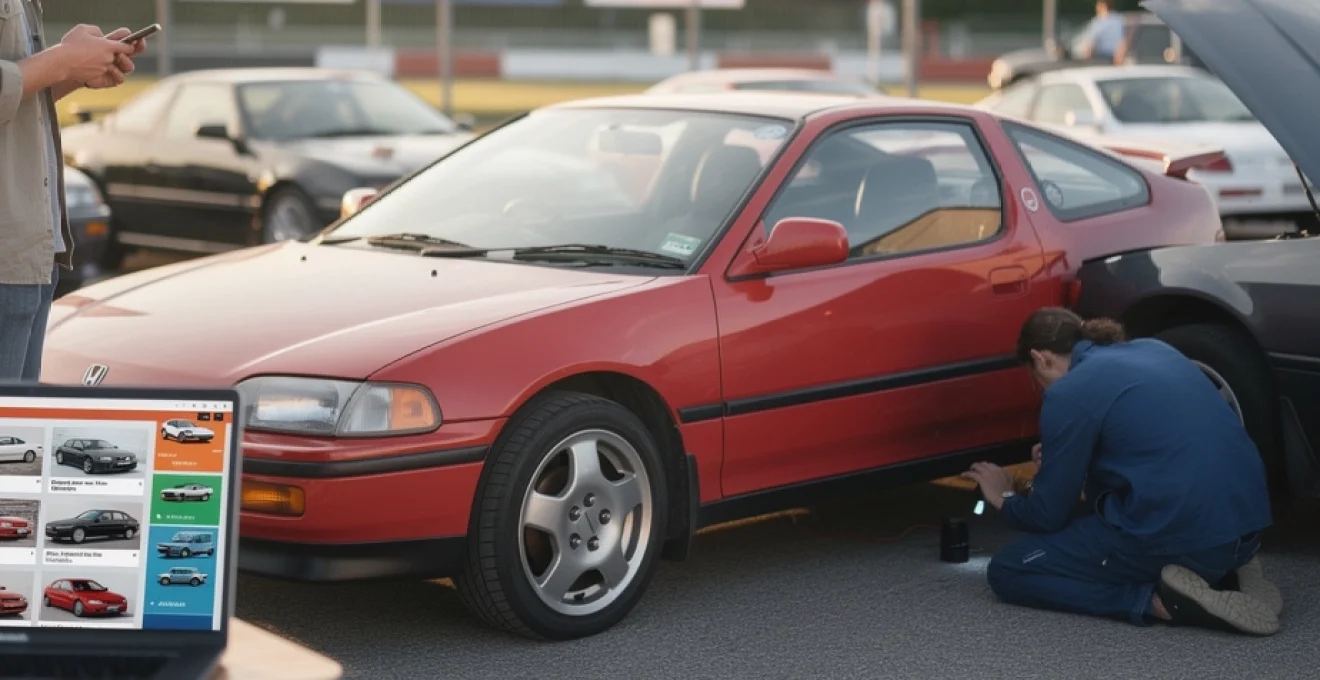
The Honda CRX has moved from everyday commuter to cult classic in just a couple of decades. Lightweight, rev‑happy and wonderfully simple to work on, it offers a kind of analogue driving feel that modern hot hatchbacks and compact coupés rarely match. If you are hunting for a Honda CRX for sale in the UK or Europe, you are competing with collectors, track‑day fans and JDM obsessives who all know how special these cars are. Understanding the different generations, engines, body styles and marketplaces gives you a real advantage when you spot a promising advert and need to move quickly.
Values have been climbing for several years, with tidy VTEC models now regularly advertised for five‑figure sums and even project cars attracting strong money. At the same time, age, rust and past “budget” tuning mean that many surviving examples need careful evaluation before you part with your cash. With a clear strategy for where to search, which CRX variants to target and how to assess each listing, you improve your odds of finding a solid, enjoyable car rather than a long‑term welding project.
Key honda CRX generations and trim levels to target when searching for a car for sale
First-generation honda CRX (1983–1987) vs second-generation CRX (1988–1991): chassis codes (AF, AS, ED, EE) and market differences
The first‑generation Honda CRX (often tagged as AF or AS) arrived in the early 1980s as a lightweight two‑seat coupé. In the UK, most examples were relatively modest in power, but in Japan and North America higher‑spec engines made the car feel much sharper. The later second‑generation CRX, using ED and EE chassis codes, is the one most enthusiasts target when looking for a Honda CRX for sale because it combines better suspension geometry, more powerful engines and improved crash safety.
From an investment and driver‑appeal perspective, second‑generation CRX models tend to command a premium. Auction data from European classic platforms shows that late‑1980s and early‑1990s cars with strong history sell 20–40% higher than equivalent first‑generation examples. The more angular first‑gen shape has its fans, especially for retro builds, but if you want the broadest choice of performance parts and community support, focusing on the 1988–1991 CRX market pays off. Chassis codes in adverts act as a quick shorthand; if a seller mentions an ED9 or EE8, that often indicates a more desirable engine and trim level.
Uk‑spec vs JDM honda CRX models: VTEC (B16A), SiR, EF8/EF9, and grey‑import considerations
Most UK‑delivered CRXs were non‑VTEC models, whereas Japan Domestic Market (JDM) cars, such as the CRX SiR, featured the iconic B16A DOHC VTEC engine. Chassis codes like EF8 and EF9 typically point to these higher‑spec imports. JDM CRXs usually offer more power, better seats, extra equipment and subtle bodywork differences. As a result, a clean SiR import can be 30–50% more expensive than a comparable UK‑spec car, especially if rust‑free and largely unmodified.
Grey imports bring several specific checks. Rust is often less severe on Japanese cars, but verify that underseal and cavity waxing were done properly during UK registration. Insurance can be 10–20% higher for JDM‑spec models and some parts, such as trim and interior plastics, may be harder to source. Import paperwork, proof of mileage conversion and any deregistration documents from Japan add confidence. If you are new to JDM ownership, working with a specialist familiar with CRX imports helps you avoid hidden registration or compliance headaches.
CRX engine variants to look for when buying: D14, D16, B16A and common tuning potential
When browsing Honda CRX classifieds, pay close attention to engine codes. Entry‑level models often use smaller D14 or lower‑output D‑series units, which offer good fuel economy but limited performance. The sweet spot for many buyers is the D16 range, particularly the 1.6‑litre 16‑valve units found in CRX 1.6i‑16 and ESi models. These engines respond well to bolt‑on upgrades, mild camshaft changes and ECU tuning, making them ideal for fast‑road use on a sensible budget.
The legendary B16A VTEC engine in CRX VTEC and SiR versions delivers a very different character, revving eagerly to over 8,000rpm and producing around 150–160bhp from the factory. Enthusiasts frequently fit breathing upgrades, improved manifolds and remapped ECUs to release extra power while retaining reliability. A well‑maintained B16A with regular oil changes can exceed 180,000 miles or 280,000km. However, high‑mileage engines with unknown service history may require expensive head work, so compression tests and clear documentation become crucial if you are paying top money.
Body styles and special editions: CRX 1.6i‑16, CRX VTEC, CRX ESi, and rare UK or EU limited runs
Across the UK and European market, you will encounter several main CRX badges: CRX 1.6i‑16, CRX VTEC and CRX ESi are the most visible. The 1.6i‑16 typically combines a naturally aspirated D‑series engine with straightforward equipment, making it a strong candidate for a track‑day build or budget project. CRX VTEC models, especially UK‑registered cars, are now seen as collectors’ items because of their low production numbers and high‑revving B16A powerplants.
The CRX ESi, particularly in del Sol form, introduced a targa‑style roof and more comfort‑oriented features. While purists sometimes prefer the tin‑top coupe shell, del Sol ESi and VTi versions can be more affordable and often used less harshly. A handful of special or limited‑run editions across the UK, Germany, Belgium and Italy came with different wheels, upholstery or body kits. These can add desirability if documented, but condition remains far more important than any minor cosmetic rarity when evaluating a Honda CRX for sale.
Where to find a honda CRX for sale in the UK: online marketplaces, specialist platforms and dealer networks
Using auto trader, PistonHeads and car & classic effectively for honda CRX listings
General classified sites such as Auto Trader, PistonHeads and Car & Classic remain the backbone of the UK Honda CRX market. Auto Trader tends to feature more retail or dealer‑supplied cars, whereas PistonHeads and Car & Classic often showcase enthusiast‑owned examples and project cars. When searching, use both the “Honda CRX” and “Honda Civic CRX” filters, as some sellers list their cars under the broader Civic umbrella, especially for later del Sol models.
Saved searches and email alerts are invaluable; with fewer than a few dozen good CRXs for sale across the country at any one time, the best cars can sell within days. Check how long an advert has been live and watch for price drops, which may indicate that the seller is ready to negotiate. High‑quality photos, detailed descriptions and extensive service history usually correlate with better‑cared‑for cars, while vague adverts with a single image are more likely to hide rust or mechanical issues.
Leveraging facebook marketplace and CRX‑specific facebook groups for enthusiast‑owned cars
Facebook Marketplace has become a dominant platform for older Japanese performance cars. Many Honda CRX owners prefer it because listings are free and communication is instant. When you search “Honda CRX for sale” or “CRX VTEC” and filter by distance, you often uncover cars that never reach the traditional classifieds. The downside is variable listing quality and a higher risk of incomplete information or missed MOT details.
CRX‑specific Facebook groups and wider Honda communities can be even more valuable. Enthusiast‑run groups often have strict rules about listing condition, price and photos, which increases transparency. You also benefit from group knowledge; other members may know the car personally, having seen it at meets or previous adverts. This kind of informal provenance is surprisingly useful, particularly when you want to confirm how long a car has been modified, tracked or daily‑driven.
Japanese import platforms: using auctions like USS, BH auction, goo‑net exchange and dealers such as torque GT
If you want a clean, rust‑free JDM Honda CRX, using Japanese auction and import platforms becomes almost essential. Large auction houses such as USS and BH Auction list a wide range of classic Hondas, while portals like Goo‑net Exchange collate dealer stock across Japan. Working with a UK‑based import agent allows you to search these databases, review translated auction sheets and obtain graded condition reports before bidding.
Specialist importers and dealers, such as Torque GT and similar JDM‑focused businesses, handle the entire process from bidding to shipping, IVA testing and registration. Expect to pay a sourcing fee plus shipping, taxes and preparation, typically adding 30–40% on top of the hammer price. The upside is access to cars that may have spent their entire lives away from salted winter roads, with far less structural corrosion. If you are aiming for a long‑term keeper, starting with a cleaner shell from Japan often proves cheaper than extensive welding on a local car.
Contacting classic and retro performance dealers: HJ classics, 4 star classics, duncan hamilton rofgo and similar specialists
A small but growing number of classic and retro performance dealers in the UK now recognise the Honda CRX as a desirable modern classic. Dealers in this niche often handle everything from 1980s hot hatches to 1990s JDM legends. While prices tend to be higher than private sales, you benefit from indoor storage, professional photography and more thorough mechanical checks. Many of these dealers also accept part‑exchanges, which can help if you are moving out of another classic or performance car.
Stock turnover is usually slower than mainstream classifieds, but condition standards are higher. Dealers sometimes know of cars that are not yet advertised because long‑term owners approach them privately. A polite email or phone call to outline what you are looking for – specific generation, engine and budget – can place you on a waiting list for upcoming CRX stock. For buyers with limited time, this curated approach can be worth the extra cost.
Monitoring online auction sites like collecting cars and bring a trailer (for reference pricing and sourcing)
Online auction platforms such as Collecting Cars in the UK and Bring a Trailer in the US have become influential price benchmarks for modern classics. Even if you never bid, monitoring completed Honda CRX auctions provides invaluable data on current market values by spec, mileage and condition. For example, clean, low‑mileage CRX VTEC models have achieved strong five‑figure results, while modified track cars show more volatile pricing depending on build quality.
These auctions often include extensive photo galleries, underside shots and detailed descriptions, which can serve as a reference when evaluating other adverts. Learning what bidders praise or criticise in the comments also sharpens your eye. Although shipping a car from overseas might not suit every buyer, occasionally an exceptionally original or rare‑spec CRX appears on an international platform at a realistic price, even after transport costs are factored in.
Finding honda CRX cars via owners’ clubs, forums and local enthusiast networks
Honda CRX owners club UK and honda civic / CRX forums as primary sourcing channels
Owners’ clubs remain one of the most reliable ways to locate a well‑cared‑for Honda CRX for sale. The Honda CRX Owners Club UK, along with wider Civic and CRX forums, has classified sections where long‑term members advertise their cars. Vehicles sold through these communities typically have detailed build threads, MOT histories and photographs spanning years, giving you a deeper picture of how each car has been used and maintained.
Forum culture also encourages more honest descriptions. If a seller misrepresents a car, other members usually speak up, which discourages misleading adverts. Spending time reading build logs and technical posts helps you understand common problems and typical upgrade paths, from suspension refreshes to engine swaps. That knowledge makes you a more confident buyer when a promising CRX appears for sale on the forum or elsewhere.
Attending UK car meets and shows (japfest, JDM combe, players classic) to discover off‑market CRX sales
National events such as Japfest, JDM Combe and Players Classic attract a wide cross‑section of UK Honda owners, including CRX drivers who may not advertise their cars online. Walking around club stands and chatting to owners allows you to see cars up close, hear them running and find out who might be open to selling. Informal conversations at these shows often uncover “off‑market” opportunities that never appear in public classifieds.
Event organisers have reported rising attendance for Japanese‑themed shows over the last five years, mirroring the surge in interest for 1980s and 1990s performance cars. Bringing photos of your current or past projects helps to build trust with potential sellers, especially if you are aiming for a higher‑value VTEC or SiR. Meeting owners in person also reveals how they treat their cars, from tyre choices to warm‑up habits, which can say as much as any advert description.
Using discord, reddit (r/honda, r/projectcar) and specialist WhatsApp groups to access private‑sale CRXs
Newer communication platforms such as Discord and Reddit have become powerful tools for sourcing private‑sale Hondas. Subreddits like r/Honda and r/projectcar often feature CRX build threads where owners casually mention that their car might be available. Discord servers dedicated to JDM and classic Honda communities can be even more immediate, with members posting links to Facebook Marketplace or forum adverts as soon as they appear.
Specialist WhatsApp groups, usually spun out of forum or club communities, often act as the first place where owners float the idea of selling. If you become a regular, contributing technical advice or parts leads, other members are more likely to offer you “first refusal” on their cars. This inner circle access can make the difference when a rare, low‑owner CRX pops up and multiple buyers are waiting with cash ready.
Networking with honda tuners and garages (TDi north, romain at eurospec, area motorsport) for insider leads
Respected Honda tuners and independent garages see more CRXs than almost anyone else, from mild road cars to full race builds. Workshops such as TDi North, Eurospec, Area Motorsport and other regional specialists maintain long‑term relationships with owners, so they often know when someone is considering selling or breaking a project. A friendly chat while your own car is on the dyno can reveal upcoming cars for sale long before any advert appears.
These tuners also provide valuable insight into build quality. If a prospective purchase has been mapped or assembled by a reputable shop, that usually indicates higher standards than a home‑brew build with no dyno time. On the other hand, garages sometimes warn of cars that have been repeatedly abused or run on minimal budgets. Treat their input as another data point when deciding whether a particular Honda CRX listing deserves serious attention.
How to evaluate honda CRX classifieds: technical inspection points and red flags specific to the chassis
Identifying structural rust hot‑spots: sills, rear arches, chassis rails, rear trailing arm mounts and floorpan seams
Rust is the single biggest enemy when buying a Honda CRX in the UK or northern Europe. Key areas include the sills (especially behind the plastic side skirts), rear wheel arches, front chassis rails and the rear trailing arm mounts. Water traps around the sunroof aperture and boot seal can also cause hidden corrosion. A car that looks tidy on top can hide serious issues underneath, so insist on ramp access or at least ramps and a torch for any serious viewing.
Pay close attention to floorpan seams, particularly where the rear seat pan meets the inner sills and boot floor. Previous repairs may show as thick underseal, lumpy seam sealer or mismatched paint. Surface corrosion is manageable, but structural rot near suspension mounting points can be expensive to fix properly. In many cases, paying more for a solid shell saves thousands compared with restoring a rusty “bargain.”
Verifying originality vs modifications: suspension, coilovers, engine swaps, roll cages and body kits
Many Honda CRXs on the market have been modified, sometimes extensively. Common upgrades include coilover suspension, uprated anti‑roll bars, aftermarket wheels and engine swaps to B‑series or even K‑series units. While tasteful modifications can improve performance and enjoyment, poorly executed changes often mask issues or compromise reliability. Check for brand‑name components, professional‑looking installation and alignment printouts where geometry has been altered.
Originality increasingly matters for long‑term value. Uncut dashboards, factory seats and OEM body panels are becoming harder to find, especially on VTEC models. If you plan to return a car to stock, factor in the cost of sourcing original parts, which can be high due to limited availability. Conversely, if you want a dedicated track or sprint car, a well‑built modified CRX with a cage, brakes and cooling already sorted can offer exceptional value compared with starting from scratch.
Assessing drivetrain health: synchro wear in 5‑speed gearboxes, clutch slip, engine compression and VTEC engagement
The CRX’s 5‑speed manual gearbox is generally robust, but worn synchros, particularly on second and third gears, are increasingly common. During a test drive, shift briskly but not aggressively and feel for crunching or resistance on upshifts and downshifts. A gearbox rebuild can cost a significant percentage of the car’s value, so budget accordingly if you detect issues. Clutch slip under full‑throttle acceleration in higher gears indicates a replacement is due in the near term.
For VTEC‑equipped B16A cars, confirm that VTEC engages cleanly at the expected rpm, with a noticeable change in engine note and pull. Lack of engagement can point to low oil pressure, sensor faults or incorrect ECU mapping. A compression test on any high‑mileage engine provides a simple snapshot of internal health; consistent readings across all cylinders are more important than the exact numbers. Ask the seller whether timing belts and water pumps were replaced on schedule, as overdue belts pose an obvious risk.
Checking for accident damage and poor repairs: misaligned panels, overspray, replica mugen or spoon parts
Accident damage is not unusual for older lightweight coupés, but quality of repair varies wildly. Look for misaligned bumpers, inconsistent panel gaps and doors that do not shut cleanly. Overspray on window rubbers, wheel‑arch liners or under bonnet edges suggests quick resprays rather than careful paintwork. Original chassis stickers and VIN plates in the engine bay and door shuts should match the V5C and any imported paperwork.
Replica body kits and counterfeit “Mugen” or “Spoon” parts have become widespread, especially on imported or heavily modified CRX builds. While appearance replicas are not necessarily a problem, they can indicate a build based more on image than quality. Genuine branded components usually carry serial numbers, quality castings and better fitment. If a car is advertised as having rare or expensive parts, ask for invoices or proof of purchase to substantiate the claims.
Reviewing documentation: MOT history, service records, timing belt intervals and DVLA records for mileage discrepancies
Strong documentation separates the best Honda CRXs from the rest of the market. In the UK, the online MOT history tool allows you to check mileage and advisory patterns going back many years. Repeated notes about “corrosion in prescribed areas” or “oil leaks” reveal how long certain issues have been present. A thick folder of receipts for servicing, parts and upgrades provides reassurance that maintenance has been ongoing rather than reactive.
Timing belt intervals on older Hondas are typically around 60,000 miles or five years; if there is any doubt, plan to change belt, tensioner and water pump soon after purchase. For imported cars, check that the speedometer conversion from km/h to mph was documented, and that odometer readings make sense across Japanese and UK paperwork. Mileage discrepancies do not necessarily kill a deal on a 30‑year‑old car, but they should adjust the price you are willing to pay.
| Check | Why it matters for a Honda CRX | Potential cost if ignored |
|---|---|---|
| Sill and arch rust | Common structural issue on UK and EU cars | £1,000–£3,000 in welding and paint |
| Gearbox synchros | Frequent wear point on spiritedly‑driven cars | £600–£1,200 for rebuild or replacement |
| Timing belt history | Critical for D‑series and B‑series engines | Engine damage if belt fails (£1,000+) |
| Import paperwork | Proves mileage and legal registration | Insurance, resale and registration issues |
Price ranges and market valuation for honda CRX models in the UK and europe
Prices for Honda CRXs vary widely depending on generation, engine and condition. In the UK, non‑VTEC project cars with visible rust and short MOTs can start from around £2,000–£3,500. Usable, MOT’d CRX 1.6i‑16 or ESi models typically sit in the £4,000–£7,000 bracket, depending on mileage and history. Well‑sorted, mostly original examples may push into the £8,000–£10,000 range as demand for tidy 1990s Hondas continues to grow.
VTEC‑equipped CRX models and clean JDM imports command a notable premium. UK‑spec CRX VTEC cars in solid, largely original condition commonly list between £10,000 and £16,000, with exceptional low‑mileage examples advertised for more. In mainland Europe, asking prices of €10,000–€16,000 for high‑spec or restored cars are increasingly normal, as seen across Dutch, German, Belgian and Italian classifieds. Statistical analysis of recent sales data from European auction sites shows an average annual price growth of 5–8% for desirable CRX variants since 2018.
Modified or track‑focused builds can be harder to value. Professionally prepared cars with documented engine builds, safety gear and dyno sheets might cost less than the sum of their parts, offering strong value if you plan heavy track use. However, resale markets for heavily customised CRXs are narrower. If you want a car that holds value as a modern classic, prioritising originality, factory colours and reversible modifications generally makes more sense.
Quite often, the cheapest Honda CRX for sale ends up being the most expensive once rust repair, drivetrain refreshes and missing trims are properly costed.
Using japanese car importers and auction agents to source honda CRX units from japan
Working with a Japanese car importer or auction agent offers access to CRXs that never reached the UK or European market in significant numbers, particularly high‑spec SiR and later del Sol VTi models. The process usually starts with a consultation, where you outline your budget, preferred chassis code, engine and acceptable auction grade. Your agent then monitors weekly auctions, sends you candidate listings and advises on likely landed costs once shipping, duty and VAT are included.
Detailed auction sheets, translated by the agent, highlight rust, accident history and interior condition. While the grading system is not perfect, a Grade 4 car with B‑grade interior and under 120,000km typically represents a very smart starting point. Once you commit to bidding, you pay a deposit, and if successful, the car is transported to port, loaded and shipped to the UK or your chosen European country. Shipping times are typically 6–8 weeks by sea, though this can vary with global logistics conditions.
Think of a good import agent as a combination of translator, car inspector and logistics coordinator, compressing a complex international process into a structured, predictable experience.
On arrival, the car usually passes through a specialist workshop for undersealing, basic servicing and any conversion work, such as rear fog‑light fitting or speedometer changes. Registration with your local authority follows, after which the CRX can be taxed and insured. While total costs may initially look high, especially compared with rough local cars, the long‑term benefits of a cleaner shell and lower hidden rust can be significant. If you want a near‑factory‑fresh CRX experience, importing a high‑grade car from Japan is often the most realistic route today.
Negotiating, securing and transporting a honda CRX purchase: payment methods, pre‑purchase inspections and logistics
Once you have located a promising Honda CRX for sale, negotiating and securing the deal becomes the priority. Preparation helps: arrive with a clear understanding of current market values for that specific spec and condition, backed by listings and auction results. If a car has been advertised for several weeks without sale, a realistic offer 5–10% below asking is often reasonable, especially if you can complete quickly. For rare VTEC or SiR models, expect less flexibility; strong demand reduces negotiation room.
Whenever possible, arrange a pre‑purchase inspection. This can be a formal assessment by a specialist garage familiar with classic Hondas or an informal visit with a knowledgeable friend from the CRX community. An hour on a lift can expose rust, oil leaks and DIY wiring that photos never show. If the car is far from home, paying for a local inspection before travelling saves wasted journeys. Some buyers use mobile inspection services as an independent assessment, particularly for higher‑value cars.
- Use secure payment methods such as bank transfer or escrow services for high‑value CRXs.
- Draft a simple bill of sale including VIN, mileage, agreed price and any verbal promises.
- Arrange classic car insurance and temporary cover before driving the CRX home.
- Consider covered transport if the car is untaxed, SORN’d or recently recommissioned.
Transport logistics deserve careful thought, especially for non‑running projects or freshly imported cars. Covered trailers protect against stone chips and road grime, which matters if you have just invested in paint or undersealing. For longer distances, professional vehicle transporters provide tracked collection and delivery, giving you peace of mind. If you choose to drive the car home, plan a route that allows you to listen for mechanical issues and stops for temperature checks, particularly if the CRX has recently emerged from storage.
After the car arrives, a thorough baseline service sets a stable foundation. Replace fluids, filters, belts and ignition components as needed, and schedule a detailed inspection of suspension bushes, brake lines and tyres. Treat this like resetting the clock on an old but finely‑made mechanical watch: once the fundamentals are right, you can enjoy the character and feedback that made the Honda CRX legendary in the first place, whether your priority is Sunday B‑roads, track days or careful preservation as a modern classic.