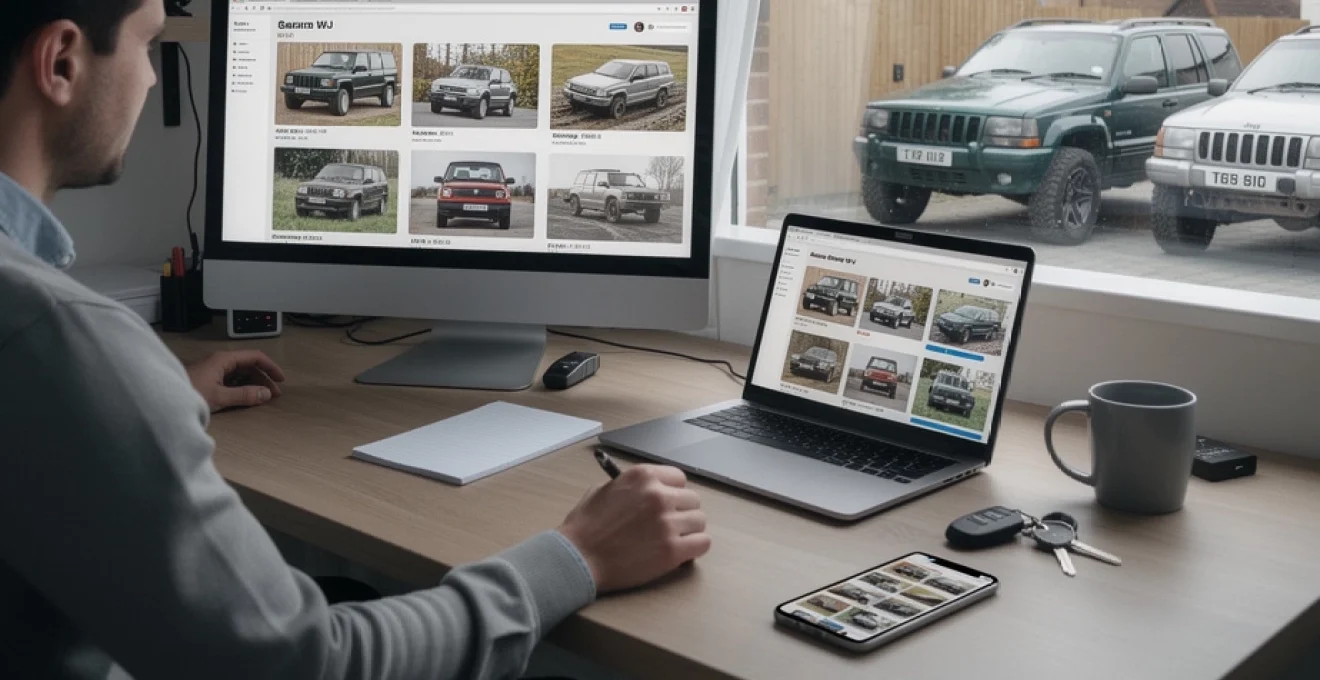
The Jeep Grand Cherokee WJ has shifted from being just another used 4×4 to a genuine modern classic in the UK. Values are still accessible, but clean, rust‑free examples with good history are becoming harder to find each year. If you want a capable daily driver, a dependable tow rig or a serious off‑road build, choosing the right WJ now can save thousands in repairs later. Understanding where to look, how to read adverts, and what the hidden weak points are gives you a real advantage. Once you know how the UK market for the Jeep WJ works, every listing tells a story: how it has been driven, where it has lived, and whether it deserves a place on your driveway.
Evaluating the used jeep WJ market in the UK: pricing brackets, trim levels and drivetrain specs
The used Jeep WJ market in the UK is small compared with Land Rover or Japanese 4x4s, but demand is quietly rising. Many WJ Grand Cherokees advertised between 1999 and 2004 now sit in the £2,000–£4,500 bracket, with exceptional low‑mileage examples advertised closer to £6,000. Diesel 2.7 CRD models dominate UK listings, yet enthusiast demand increasingly favours the 4.0 petrol and 4.7 V8 because of reliability and parts availability. When you study search results from large platforms, you quickly see a pattern: buyers pay a premium for rust‑free shells, Quadra‑Drive II, and documented servicing rather than just low mileage.
Comparing jeep grand cherokee WJ trim levels in listings: laredo, limited, overland and special editions
Most UK Jeep Grand Cherokee WJ listings describe the trim as Laredo, Limited or Overland. Laredo is the entry‑level specification, often with cloth seats and simpler equipment; it can be ideal if you want a lighter, less complex base for off‑roading. Limited models are far more common, bringing leather, climate control, upgraded audio and more comfort, which suits mixed daily use and touring. Overland sits at the top of the range, usually paired with the 4.7 HO V8 in left‑hand‑drive markets, though in the UK many Overlands are 2.7 CRD with luxury trim but the same core chassis. Special editions appear occasionally in adverts (for example “Anniversary” or “Freedom” packs), but these rarely change the mechanical specification.
Understanding WJ powertrain configurations in adverts: 4.0 inline‑six, 4.7 V8, 2.7 CRD diesel and Quadra‑Drive II
Powertrain choice shapes how a Jeep WJ drives and how much it costs to run. The 4.0 inline‑six petrol is famously tough, with many examples passing 200,000 miles if oil changes are kept up; fuel economy of 18–22 mpg is typical in mixed UK driving. The 4.7 V8 offers significantly more torque and a smoother feel, ideal if you plan to tow; expect closer to 15–19 mpg. The 2.7 CRD, based on a Mercedes diesel, can return 25–30 mpg on a run, but has more potential for expensive failures if neglected. Drivetrain codes in adverts like Quadra‑Drive II, Quadra‑Trac II or Selec‑Trac tell you how sophisticated the four‑wheel‑drive system is and how suitable it will be for snow, mud and green‑laning.
Typical UK price ranges for jeep WJ for sale by mileage, condition grade and service history
Price for a Jeep WJ for sale in the UK typically reflects a mix of mileage, visible rust, and the thickness of the service file more than age alone. High‑mileage diesels around 150,000–200,000 miles can appear from £1,500–£2,500 if MOTs show recurring advisories. Petrol WJs with around 100,000 miles and full history often sit between £3,000–£4,500. Well‑maintained, enthusiast‑owned examples with upgrades such as refreshed suspension, recent tyres and rebuilt brakes might command upwards of £5,000. Statistically, a WJ that has passed its last three MOTs without corrosion advisories is more likely to have avoided structural rust, which justifies paying more than a seemingly “cheap” but rotten alternative.
Identifying rust‑belt versus dry‑climate imports in WJ adverts and MOT histories
Rust is one of the biggest threats to a WJ chassis in the UK, especially in areas where winter gritting is heavy. Some Jeep Grand Cherokee WJ vehicles are imported from drier European climates or the US Sun Belt, which can mean remarkably clean underbodies. Advert wording such as “imported from Italy/Spain/California” is a strong clue, and you can cross‑check by reviewing early MOT histories and registration dates on the DVLA website. Look for recurring notes about “corrosion to sills, chassis rails, brake pipes” as a warning sign. A WJ with a dry‑state background and minimal rust is usually a far better long‑term investment than a salt‑belt car, even with slightly higher mileage.
Where to find jeep WJ for sale on classified ad platforms and auction sites
Locating a good Jeep WJ for sale in the UK starts with knowing which platforms consistently show usable stock. Mainstream classified sites often carry more modern Grand Cherokee generations, so detailed filtering is essential to avoid wasting time on unrelated models. Combining searches across several sites helps build a picture of national pricing and supply, particularly when comparing petrol and diesel WJs. Auction listings, both public and trade‑oriented, can expose cheaper “project” vehicles, but also carry more risk, especially if you bid without seeing the Jeep in person first. Balancing these channels gives you access to everything from tidy daily drivers to salvage WJs suitable only for parts or full rebuilds.
Using auto trader, motors.co.uk and gumtree advanced filters for jeep grand cherokee WJ searches
On mainstream classified portals, accurate filtering is crucial because “Grand Cherokee” adverts span several generations. Use model year filters to target 1999–2004 and, where possible, keyword filters such as “WJ” or engine sizes like “4.0” or “4.7”. On some platforms, selecting body style as “SUV/4×4” and specifying automatic gearbox plus 4WD narrows results further. It helps to save searches and set up alerts, especially for rarer 4.0 petrol WJs that appear less frequently than 2.7 CRD. Rechecking these sites every few days reveals which cars sell quickly and which linger, providing real‑world feedback on realistic asking prices.
Sourcing jeep WJ on ebay motors and copart UK salvage auctions for project and breaker vehicles
For project WJs, eBay Motors and salvage platforms can be rich hunting grounds. Search phrases such as “Jeep WJ 4×4 for spares or repair” or “Jeep Grand Cherokee 4.7 Limited breaking” often uncover vehicles with mechanical faults but sound bodywork. Copart UK and similar salvage auctions regularly list insurance‑categorised Grand Cherokees, some recorded as Cat N or Cat S after damage. Auction descriptions may be brief, so a pre‑bid inspection or access to detailed images is extremely valuable. If you run or plan to run a WJ off‑road build, buying a damaged donor can be the most economical way to source axles, interior parts and drivetrain units like the 545RFE automatic
Targeting jeep‑friendly dealers and 4×4 specialists listing WJ stock in england, scotland and wales
Some independent 4×4 dealers understand the Jeep WJ better than generalist forecourts and often price them more realistically. Many listings on UK dealer aggregators show Grand Cherokees from 2006 onward, but occasionally also include late WJ examples or early WK models that share some components. Dealers who regularly sell Wranglers, Cherokees and Patrols tend to recognise rust and drivetrain issues more quickly, which benefits you as a buyer. In practice, a WJ purchased from a specialist with a fresh MOT and pre‑sale inspection may cost more upfront, yet can reduce the chance of hidden faults dramatically. Stock at these businesses changes rapidly, so direct contact is often more effective than waiting for every car to appear online.
Leveraging facebook marketplace and jeep UK buy‑swap‑sell groups for local WJ private sales
Facebook Marketplace has become a major source of used 4x4s, including older Grand Cherokee WJ models. Search both “Jeep Grand Cherokee” and “Jeep WJ” and expand the radius to capture regional listings; some sellers do not tick “4×4” or “SUV”, so manual browsing is useful. Dedicated Jeep UK buy‑swap‑sell groups often host better‑maintained vehicles, as enthusiast owners tend to describe faults honestly and supply detailed photographs. Private sales allow direct conversation, giving you a chance to ask about known WJ weak points such as transfer case noises or heater blend door problems. Meeting locally also makes it easier to inspect the Jeep thoroughly and negotiate based on real‑world condition rather than just asking price.
Monitoring classic car auctions, anglia car auctions and manor park classics for emerging WJ interest
As WJ values creep up, more UK auction houses that specialise in modern classics are beginning to feature them. Occasional Jeep Grand Cherokee WJ entries at Classic Car Auctions, Anglia Car Auctions or Manor Park Classics give a snapshot of what enthusiasts are currently willing to pay. Hammer prices at these events, plus buyer’s premium, often exceed typical online classifieds because bidders are chasing clean, low‑owner examples. That said, not every WJ at auction is pristine; some are entered precisely because traders do not want to fund corrosion repairs. Watching sale catalogues over several seasons provides useful data on trends, including whether petrol or diesel, Laredo or Overland, attracts stronger bidding.
Finding a jeep WJ through jeep clubs, forums and enthusiast communities
Jeep clubs and online forums are often the best way to discover well‑cared‑for WJ examples that never reach public classifieds. Enthusiast owners typically maintain comprehensive records, photograph modifications and share repair write‑ups, all of which you can review before travelling. Club‑sourced WJs might cost a little more than anonymous adverts, yet often save money due to recent work on suspension, brakes, cooling or electrics. Beyond buying, these communities provide ongoing technical support, parts recommendations and introductions to trusted specialists. For anyone serious about keeping a WJ long‑term, tapping into this network makes ownership more predictable and enjoyable.
Using JeepOwnersClub.co.uk, NAXJA and JU forums to access member‑only WJ classified sections
Established Jeep forums host member‑only classified sections where vehicles change hands quietly between enthusiasts. Once registered, you can search for “Grand Cherokee WJ 4.7 Limited” or “2.7 CRD Overland” and often find detailed build threads behind each car. Owners frequently list every service item, from ATF changes in the 42RE or 45RFE gearbox to cooling system overhauls, which reduces the risk of nasty surprises. Forum communities also tend to police dishonest sellers, so feedback from long‑term members carries real weight. If you are patient, this route can produce a WJ that has been maintained to a standard rarely seen at general dealers.
Networking at UK off‑road events such as billing off road show and british indoor 4×4 show
Major UK off‑road events often attract Grand Cherokee WJ owners, especially those running lifted, modified or expedition‑prepared builds. Events like Billing Off Road Show, the British Indoor 4×4 Show and regional pay‑and‑play days provide a relaxed chance to see different setups in person. Speaking to owners reveals which modifications actually improve reliability, such as upgraded radiators or heavy‑duty control arms, and which are mainly cosmetic. You may encounter WJs quietly for sale or owners considering a future sale, giving you an early opportunity. Personal relationships built at these gatherings often lead to better‑documented, well‑maintained vehicles when owners decide to move on.
Working with local jeep specialists like surrey 4×4, brighton 4×4 and specialist breakers for WJ leads
Independent Jeep specialists and 4×4 breakers see WJs every week, whether for servicing, MOT repairs or dismantling. Workshops such as Surrey‑area or south‑coast Jeep garages often know which customers might be thinking of selling and can make introductions. Breakers yards that handle WJs also provide a realistic picture of common failure areas, from rusted rear chassis legs to failed transfer cases. Establishing a relationship with these businesses pays dividends: you gain early notice of incoming stock, and potentially access to pre‑sale inspections or lift‑ramp checks. This inside track can be the difference between buying a solid example and unknowingly taking on a costly restoration.
Identifying well‑maintained WJ examples from enthusiasts with documented modification logs
Many WJ enthusiasts maintain modification logs or build threads that read almost like a service manual for their own vehicle. These logs might cover lift kits, Old Man Emu springs, upgraded track bars, brake overhauls, and even differential rebuilds. When a Jeep with this level of documentation comes up for sale, you can see exactly what has been changed, when, and with which parts. While a heavily modified WJ may not suit every buyer, such transparency is invaluable if you plan to continue off‑road upgrades. A stock‑looking WJ with vague history can be far more of a gamble than a tastefully modified one with precise, written records.
Assessing jeep WJ condition in listings: common failure points and inspection checklists
Buying a Jeep Grand Cherokee WJ in the UK without a structured inspection can quickly turn a bargain into an expensive project. Age, mileage and climate exposure all play a role, but known weak points are well documented and relatively easy to check if you know where to look. Treat the initial advert as a starting point, then back it up with MOT history, photographs, and a thorough in‑person inspection. Several UK insurance studies show that corrosion‑related MOT failures on 4x4s increase sharply after 15 years, and the WJ is no exception. A systematic checklist keeps you focused and reduces the risk of being distracted by leather seats or shiny paint while missing serious structural issues.
Analysing MOT history for corrosion, brake line failures and structural chassis rust on WJ models
The UK MOT history service is a powerful, free tool when assessing a WJ. Search by registration and look for a pattern of advisories like “corrosion to chassis rails,” “brake pipes corroded” or “floor pan corroded but not seriously weakened.” Repeated advisories that never become repairs are red flags, showing the previous owner tolerated marginal condition for years. According to DVSA data, corrosion contributes to around 15–20% of MOT failures in older 4x4s, so it should never be ignored. A clean MOT history over several years, especially in coastal or high‑salt regions, is often a strong indicator that the underbody has been protected or the Jeep has not been heavily winter‑used.
Spotting 4.7 V8 and 4.0 engine issues in adverts: overheating, head gasket failure and oil sludge
Engine health on a WJ is usually reflected in how the seller describes recent work and current behaviour. Phrases like “uses a bit of coolant” or “occasionally runs hot in traffic” can indicate early signs of overheating or head gasket problems, particularly on the 4.7 V8. The 4.0 inline‑six is tough but not immune to neglect; long oil intervals and poor‑quality lubricants can cause lifter noise or sludge buildup. A careful buyer asks about recent cooling system work—radiator, water pump, thermostat—and listens for knocking or tapping at cold start. If a seller mentions “new head gaskets” without explaining why they failed, treat the engine as suspect until a compression test or independent inspection proves otherwise.
Evaluating WJ automatic gearbox and transfer case health: 42RE, 45RFE, 545RFE and NV247 symptoms
WJ automatics such as the 42RE, 45RFE and 545RFE are generally durable if serviced with the correct ATF and filter changes. Symptoms like harsh shifts, delayed engagement when selecting Drive, or flaring between gears suggest internal wear or low fluid. The NV247 transfer case used with Quadra‑Drive can suffer from wear in the progressive coupler, leading to binding in tight turns or clunking when changing from reverse to drive. On a test drive, engage low range to confirm it selects smoothly and disengages without grinding. Independent gearbox specialists often quote £1,000–£1,800 for full rebuilds, so any sign of slip or heavy noise deserves careful negotiation on price.
Checking jeep WJ suspension, steering and axle components: control arms, track bar and unit bearings
Suspension and steering wear is common on any twenty‑plus‑year‑old 4×4 and the WJ is no exception. Worn control arm bushes, tired track bars and ageing ball joints cause wandering, clunks and vague steering, particularly at motorway speeds. Front unit bearings sometimes fail around 100,000–120,000 miles, leading to rumbling noises that change with speed. A test drive over rough roads helps expose knocks and rattles, while rocking the steering at standstill can reveal play in track bars and tie rods. Parts prices remain reasonable compared with some European SUVs, but labour mounts up quickly, so buying a WJ with recently refreshed suspension often represents better long‑term value.
Reviewing electrical systems and CAN‑bus faults: VIC, BCM, heated seats, ABS and airbag warning lights
Electrical quirks are part of WJ ownership, yet persistent warning lights can hint at deeper problems. The Vehicle Information Centre (VIC) may display intermittent messages about doors or lights; sometimes this is just a sensor, but steady ABS or airbag lights require proper diagnostics. Failed heated seats, erratic central locking or gauges that drop to zero while driving all point to potential Body Control Module or wiring issues. While many faults are fixable with contact cleaning, relays or replacement modules, others may indicate water ingress or amateur alarm installations. A WJ with a clean dashboard—no warning lights after the initial bulb check—and fully functioning windows, mirrors and instruments deserves serious consideration.
Choosing the right jeep WJ specification for daily driving, towing and off‑road builds
Selecting the right Jeep WJ specification is like choosing the right tool from a toolbox: each engine and drivetrain combination excels at a different job. Daily commuting, caravan towing and green‑laning all place different demands on the same basic platform. For UK buyers, fuel prices, ULEZ rules and road tax bands all influence the decision as much as power and comfort. The beauty of the WJ is its flexibility; with the correct specification, it can handle school runs during the week and muddy tracks at the weekend. Matching your intended use to engine, gearbox and transfer case from the start avoids expensive compromises later.
Selecting between 4.0 petrol, 4.7 V8 and 2.7 CRD for UK fuel economy, reliability and towing capacity
For primarily urban and light mixed driving, the 4.0 petrol often provides the best balance of simplicity and durability, even if official fuel figures sit around 20 mpg. The 4.7 V8 is the enthusiast’s choice for towing horseboxes, track cars or larger caravans thanks to its strong torque curve and smooth delivery. In many owner reports, a well‑maintained 4.7 tows more confidently than the 2.7 CRD, despite similar paper towing capacities. The 2.7 CRD remains attractive if you cover high motorway mileages and want closer to 28–30 mpg, but only if service history proves regular oil, filter and transmission fluid changes. Personal experience from many UK specialists suggests that neglected diesels often cost more to rescue than petrol V8s.
Prioritising Quadra‑Drive II, Quadra‑Trac II and Selec‑Trac systems for snow, green‑laning and overlanding
The WJ’s various 4×4 systems each suit specific usage patterns. Quadra‑Drive II with its limited‑slip differentials gives outstanding traction on slippery surfaces, making it excellent for snow, mud and uneven farm tracks. Quadra‑Trac II still provides full‑time four‑wheel drive but relies more on brake‑based traction control, which is fine for typical UK winters and occasional trails. Selec‑Trac, with its 2WD option, can marginally improve fuel consumption on dry roads and appeals to drivers who want manual control over when four‑wheel drive is engaged. For serious overlanding or camping builds, pairing Quadra‑Drive with all‑terrain tyres and a mild lift turns the WJ into a remarkably capable tourer.
Evaluating factory options: tow pack, Up‑Country suspension, skid plates and Trac‑Lok rear differential
Factory options make a substantial difference to how a WJ behaves under load and off road. The original tow pack includes a heavier‑duty cooling system, wiring and often a self‑levelling rear suspension, which improves stability when towing close to the 3,500 kg limit. The Up‑Country suspension option raises ride height slightly and includes firmer springs, ideal if you plan to add roof racks, winches or extra camping gear. Underbody skid plates and the Trac‑Lok rear differential significantly improve protection and traction on rocky green lanes. When you see these options in the original sales brochure or build sheet, it usually means the Jeep will require fewer aftermarket upgrades to match your intended use.
Assessing pre‑modified WJ builds with old man emu, iron rock off road or rough country lift kits
Pre‑modified WJs with lift kits from brands like Old Man Emu, Iron Rock Off Road or Rough Country can save money if set up correctly. A 2–3 inch lift with quality shocks, fresh bushes and correct geometry often improves ride and clearance without damaging road manners. However, poorly installed kits or extreme lifts can introduce driveline vibrations, accelerated tyre wear and premature U‑joint failure. Treat a modified WJ like a custom project car: ask for receipts, alignment reports and photographs showing how the lift was fitted. A professionally set‑up suspension upgrade can be a strong selling point, while a “home‑brew” lift with cut springs and stacked spacers should trigger immediate caution.
| Specification | Best suited for | Typical mpg (UK) |
|---|---|---|
| 4.0 petrol, Quadra‑Trac II | Mixed daily use, light off‑road | 18–22 |
| 4.7 V8, Quadra‑Drive II | Towing, heavy off‑road, touring | 15–19 |
| 2.7 CRD, Quadra‑Trac II | High motorway mileage, economy‑focused | 25–30 |
Choosing the right WJ specification is less about chasing the rarest model and more about aligning engine, drivetrain and equipment to how you will actually use the Jeep every week.
Verifying jeep WJ provenance, documentation and legal compliance in the UK
Legal and documentary checks transform a promising Jeep WJ from a risky gamble into a confident purchase. Category write‑offs, outstanding finance and incomplete import paperwork can cause serious headaches long after the keys change hands. Before committing to any Grand Cherokee, it is essential to confirm its identity, check for accident history and understand how tax and emissions rules affect running costs. With ULEZ zones expanding—London alone reports more than 4,000 non‑compliant daily penalty charges on busy days—choosing the wrong engine could make urban use uneconomical. A methodical approach to provenance helps ensure that the WJ is genuinely road‑legal, properly registered and free to sell.
Running HPI and DVLA checks on jeep grand cherokee WJ: cat N/S status, finance and plate changes
An HPI‑style data check is non‑negotiable when buying a WJ, particularly if it appears under‑priced compared with similar listings. Such reports reveal whether the vehicle has any outstanding finance, has been recorded as a write‑off (Cat N or Cat S), or has undergone suspicious plate changes. DVLA records help confirm that the VIN on the chassis matches the V5C logbook, reducing the risk of cloned or stolen vehicles. Official statistics indicate that thousands of cars each year are sold with undisclosed insurance categories, so relying on visual inspection alone is unwise. Treat a clean HPI and DVLA history as a baseline requirement rather than an optional extra.
Confirming service records, timing chain/belt intervals and ATF changes with stamped booklets and invoices
Although the WJ petrol engines use timing chains rather than belts, service documentation is still critical. The 2.7 CRD diesel has a belt‑driven system on the ancillary side and complex high‑pressure fuel components, so invoices for belt, tensioner and water pump work are reassuring. Look for evidence of regular ATF changes in the automatic gearbox—every 40,000–60,000 miles is a good practice for longevity. A thick folder of receipts for radiators, suspension arms, brake lines and tyres often signals an owner who maintained the Jeep proactively rather than reactively. When you read through paperwork, you are effectively reading the WJ’s biography: long gaps or missing invoices tell as much as stamped booklets.
Checking emissions compliance, ULEZ status and road tax banding for different WJ engines
Most Jeep WJ models pre‑date Euro 4 petrol and Euro 6 diesel standards, which limits ULEZ compatibility in cities such as London, Birmingham and Bristol. Petrol WJs registered before March 2001 often fall into older tax categories based on engine size, while later registrations use CO₂‑based banding, typically placing 4.0 and 4.7 models in high‑tax brackets. The 2.7 CRD generally attracts similar or slightly lower annual tax, but remains non‑compliant in many low‑emission zones. If you plan to drive into ULEZ areas regularly, factoring in daily charges is as important as insurance and fuel. For some buyers, choosing a WJ as a rural or second vehicle avoids these costs and makes ownership far more affordable.
Reviewing import paperwork, NOVA registration and VIN decoding for US‑spec and EU‑spec WJ models
Imported WJs can be attractive due to better specification or rust‑free origins, but documentation must be watertight. For post‑2013 imports, NOVA registration with HMRC should confirm that all duties and VAT have been settled; absence of NOVA can complicate registration or resale. The VIN plate and door jamb labels reveal build year, engine type and original market; decoding this information verifies that the advertised “Overland 4.7 HO” is genuine rather than just badged as such. US‑spec WJs may have different lighting, tow ratings and emissions calibrations, so check that any required UK conversions have been done correctly. Treat proper paperwork as a core part of the Jeep’s value, just like a solid chassis or healthy engine.
A Jeep WJ with clear paperwork, consistent VIN data and a transparent maintenance history is far easier to live with than a cheaper example hiding gaps in its past.
Applying all these checks when searching for a Jeep WJ for sale in the UK takes time, yet each step sharply reduces risk. By combining market knowledge, careful reading of adverts, structured mechanical inspection and thorough provenance verification, you place yourself among the small group of buyers who secure genuinely good WJs. That preparation ultimately translates into a 4×4 that tows reliably, survives harsh winters, tackles green lanes with confidence and still feels tight and dependable many years after purchase.