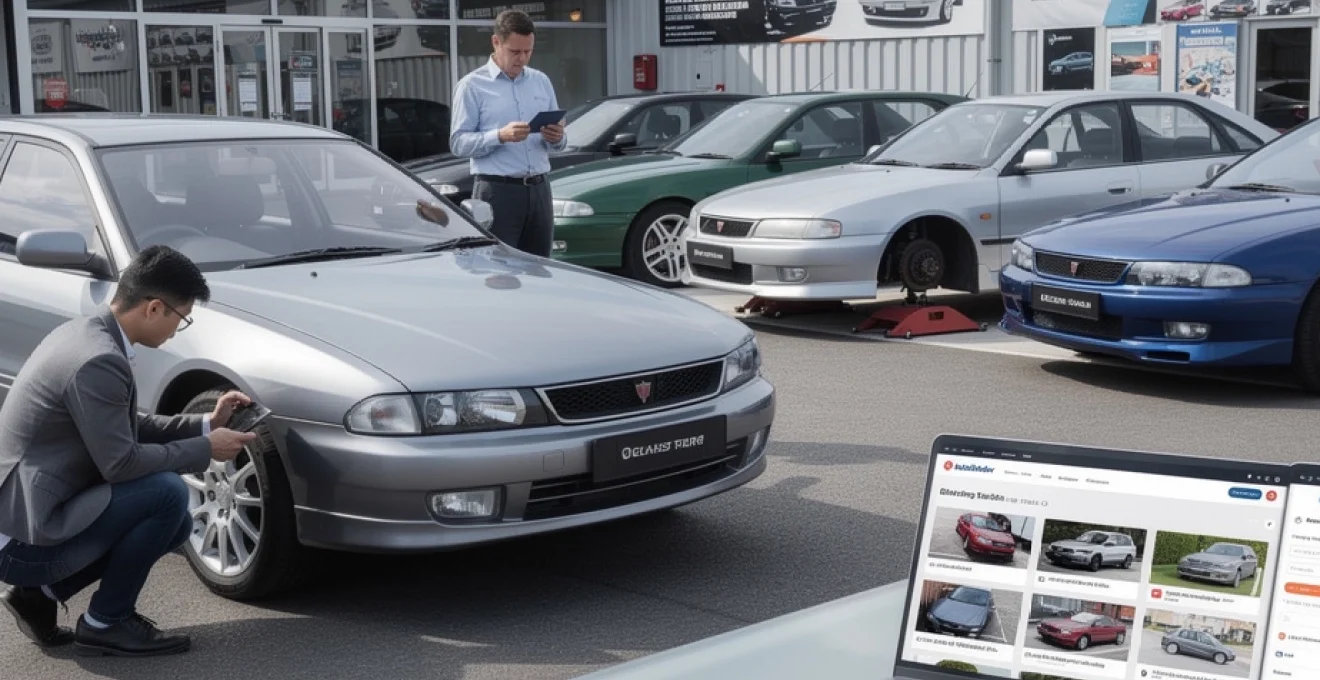
The Mitsubishi Galant wagon sits in a sweet spot between practical estate car and understated JDM hero. Values have stayed relatively sensible compared with more obvious icons, yet interest has been rising as enthusiasts move beyond Skylines and Evos. With production ending years ago and numbers on the road shrinking, tracking down a clean Galant estate or VR‑4 wagon now requires a more strategic approach than simply scrolling one local classifieds site.
If you are searching for a usable daily, a retro touring car project or a rare twin‑turbo Super VR‑4, understanding where these cars still trade is crucial. From UK and European marketplaces to Japanese auction routes and specialist importers, each channel tends to surface different specifications and conditions. With the right mix of data, chassis‑code knowledge and community networking, you can still uncover a well‑looked‑after Galant wagon instead of a rust‑ridden gamble.
UK and european markets where mitsubishi galant wagons are still traded
Locating pre-facelift galant estate (EA/EC) listings on AutoTrader, gumtree and motors.co.uk
The pre‑facelift Mitsubishi Galant estate (often coded EA5W or EA7W in Japan, and EA/EC in Europe) surfaces most reliably on mainstream UK classifieds. On sites like AutoTrader, Gumtree and Motors.co.uk you will usually find higher‑mileage 2.0 GLS, 2.5 V6 and 2.0 GDI wagons that have been used as practical family cars. Many of these long‑roof Galants now show 150,000–250,000 miles, yet examples with full histories still appear, especially from private sellers in rural areas where salt use is lower.
When searching these portals, use long‑tail queries such as “Mitsubishi Galant estate 2.5 V6 manual” or “Galant 2.0 GDI wagon for sale UK” and set alerts so you hear about new listings instantly. In the UK, official figures show only a few hundred Galants still licensed, with around 236 recorded on the road and 674 on SORN, so fresh adverts can vanish within days if the car is solid and MOT’d. Expect asking prices from £500 for rough but running examples up to £3,000–£4,000 for tidy V6 estate models.
Finding facelift galant elegance and sport estate models on ebay motors UK and facebook marketplace
The facelift Galant estate (roughly 1999–2003 in Europe) is popular with buyers looking for slightly more modern styling and better equipment. Trims such as Elegance, Sport and high‑spec GLS often include climate control, factory alloys and improved interior materials. These later cars appear frequently on eBay Motors UK and Facebook Marketplace, where private owners list them alongside more modern SUVs and crossovers.
Because these platforms favour local, photo‑heavy listings, you can judge condition quickly. Look for adverts showing detailed images of the rear arches, sills, and boot floor, as corrosion here is common. Many facelift wagons are still priced modestly: it is not unusual to see roadworthy examples between £666 and £2,900 depending on mileage and engine choice, with some European 2.5 V6 Avance and Sport Edition estates changing hands in the €2,900–€3,999 bracket.
Targeting left‑hand‑drive galant kombi imports via mobile.de, autoscout24 and leboncoin
If you are open to left‑hand‑drive, German and continental listings significantly widen the search pool. In Germany, Mobile.de and Autoscout24 regularly feature Galant kombi models, covering everything from basic 2.0 GLS wagons to rare V6 and GDI estates. France’s Leboncoin occasionally lists well‑kept Galant breaks, often with better body condition than equivalent UK cars thanks to milder winters in some regions.
Left‑hand‑drive Galant wagons can be ideal donors for rust‑free shells or for enthusiasts who plan a full build and care less about steering‑wheel position. Prices across Europe broadly mirror UK figures: budget €500–€1,000 for high‑mileage 2.0 petrol estates needing work, rising to €3,000–€5,000 for cleaner V6 kombis with documented history. Importing into the UK naturally adds registration and transport costs, but the upside is greater choice and the chance to find one‑owner cars from older drivers.
Checking specialist japanese and classic portals such as PistonHeads, car & classic and collecting cars
For enthusiasts chasing the best‑preserved Mitsubishi Galant wagons, specialist portals can be more rewarding than general classifieds. PistonHeads occasionally lists enthusiast‑owned estates and VR‑4 wagons with tasteful upgrades, while Car & Classic has become a go‑to platform for retro Japanese estates and 1990s JDM projects. Some Galant wagons also appear on auction‑style sites such as Collecting Cars, where transparent photo sets and MOT histories are a major advantage.
Across these portals, pricing trends are becoming clearer. Since 2020, recorded sales show a lowest public Galant price of around £350, a median of about £6,654 and a top sale of £14,212 for a particularly desirable example. These figures underline how condition and rarity dramatically influence value: an average 2.0 Comfort estate will sit near the bottom of the range, while a low‑mileage VR‑4 or rare Super VR‑4 estate equivalent commands a serious premium.
Specialist japanese import dealers and JDM-focused traders stocking galant wagons
Shortlisting UK importers experienced with mitsubishi (torque GT, japanese classics, JM‑Imports)
For buyers interested in JDM‑spec Galant wagons, partnering with a specialist importer often saves time and risk. Established traders that regularly handle Mitsubishi products understand EC5W VR‑4 estates, know what rust patterns to expect from Japanese imports, and can advise on insurance and registration. Importers similar in profile to Torque GT, Japanese Classics or JM‑Imports typically maintain stock lists of Legnum VR‑4 wagons, Galant VR‑4 saloons and related Mitsubishi performance models.
Some of these businesses also offer a “source to order” service, where you provide a specification—such as “EC5W Galant wagon, 6A13TT, manual, under 120,000km”—and the team bids at Japanese auctions on your behalf. Expect to pay a sourcing fee on top of hammer price, shipping and taxes, but in exchange you gain access to a much wider pool of clean, rust‑free cars than would ever surface solely on UK classifieds.
Working with brokers to source galant estate models from USS, TAA and JU car auctions in japan
Most good JDM importers and brokers use major Japanese auction houses such as USS, TAA and JU to find Galant wagons. These auction networks handle thousands of cars weekly, and while Galant and Legnum volumes are nowhere near their 2000s peak, tidy VR‑4 estates and lower‑spec long‑roof models do still appear. By using an experienced broker, you can review translated auction sheets, high‑resolution images and condition grades before deciding whether to bid.
The broker process typically runs in clear steps: initial consultation, budget agreement, live auction access, bidding, then export and shipping coordination. Because the Galant is now considered semi‑classic in Japan, auction grades 4 and above with low kilometres are rare and attract strong interest, especially if the car is a Super VR‑4 or Type‑S. For a solid grade 3.5–4 EC5W VR‑4 estate, overall landed cost into the UK commonly ends up in the £10,000–£20,000 range, depending on specification and exchange rate.
Evaluating dealer stock lists for galant V6 estate, 2.0 GDI and 2.4 GDI variants
Not every buyer wants a twin‑turbo monster. Many importers and JDM‑focused dealers also stock more modest Mitsubishi Galant wagons such as V6 estates, 2.0 GDI and 2.4 GDI variants. The 2.5 V6 provides a smooth, relaxed touring experience, while the larger GDI engines offer a blend of economy and mid‑range torque when maintained correctly. Checking dealer stock lists regularly helps you spot these sleepers before they sell to buyers prioritising comfort and space over outright performance.
When browsing inventories, pay attention to chassis codes and equipment. A V6 estate with factory sunroof, leather and manual gearbox can be surprisingly desirable, especially if rust‑free and under 160,000 km. Some dealers list both Galant and Legnum estates side by side, so searching for “Legnum VR‑4” as well as “Galant wagon” increases your chance of finding compatible parts cars, or even a better‑specified alternative to your original target.
Verifying auction sheets, chassis codes (EA7W, EC5W) and mileage records before import
Before committing to an import, verification is everything. For Japanese‑sourced Mitsubishi Galant wagons, that starts with checking auction sheets for consistency: condition grade, interior grade, mileage and noted rust or accident repairs. Comparing the printed sheet with under‑bonnet stickers and the vehicle’s VIN and chassis number (for instance EA7W for some 4WD wagons or EC5W for VR‑4 estates) quickly reveals any discrepancies.
Many importers now provide digital copies of mileage records and export certificates, and some offer third‑party inspections at the auction site. For a car that may cost five figures including shipping and tax, spending extra on independent confirmation of mileage and structural condition is money well spent. Mileage tampering in Japan is much rarer than in some markets, but due diligence still protects you from the occasional problem car or poorly repaired accident damage.
Using VIN, chassis code and engine code filters to target the exact galant wagon specification
Decoding mitsubishi galant wagon chassis numbers (EA5W, EA7W, EA8W) in online searches
Understanding Mitsubishi chassis codes transforms your search from broad and vague to precise and efficient. For estate‑bodied Galants and Legnums, codes like EA5W, EA7W and EA8W identify engine and drivetrain combinations, while EC5W marks the twin‑turbo VR‑4 wagons. In practice, typing these codes directly into search fields on import portals or into generic search engines often reveals niche adverts that never mention “Galant wagon” or “Legnum estate” in English.
This code‑based approach is particularly powerful for sourcing parts cars or specific donor shells. For example, if you need a 4WD V6 platform as a base for an engine swap, filtering for EA7W avoids trawling through unsuitable 2WD listings. Chassis codes also help differentiate pre‑facelift from facelift cars, as subtle bodywork and lighting changes may affect compatibility with aftermarket bumpers, headlights or rear light clusters.
Filtering adverts by engine codes (4G63, 4G64, 6A12, 6A13) and transmission type
Engine codes give another layer of granularity when hunting for a Mitsubishi Galant wagon for sale. Common units include the four‑cylinder 4G63 and 4G64, as well as V6 engines such as 6A12 and 6A13. The legendary twin‑turbo 6A13TT powers the EC5W VR‑4 estate, but naturally aspirated versions offer a more relaxed and often cheaper ownership experience. Many Japanese and European listing sites allow filtering by engine displacement or explicit code once you know what to type.
Transmission choice also matters. Manual VR‑4 estates and manual V6 wagons command a premium, especially among performance‑minded buyers planning track use or fast‑road builds. Automatic examples with INVECS‑II gearboxes are far more common, and many have covered high mileages reliably. When scanning adverts, long‑tail keywords like “Galant VR‑4 manual estate 6A13TT” or “Mitsubishi Galant 2.5 V6 auto wagon UK” dramatically reduce irrelevant results.
Identifying trim levels such as GLS, elegance, GDI, VR‑4 Type‑S and super VR‑4 estate equivalents
Trim level affects specification, value and desirability. European Galant estates are often labelled GLS, Classic, Elegance or Sport, with equipment levels ranging from cloth seats and manual air‑conditioning to leather interiors, climate control and upgraded audio. Japanese‑market Legnum and Galant wagons add further complexity with VR‑4, VR‑4 Type‑S and Super VR‑4 estate equivalents, each with distinctive suspension, aero and interior options.
For instance, a VR‑4 Type‑S estate usually features 4WD, active yaw control (AYC) and sportier suspension tuning as standard, making it highly sought after by drivers who value handling. Super VR‑4 variants often combine unique bodykits, Recaro seats and rare colours, placing them at the upper end of the price range. Understanding these labels helps you judge whether an asking price is realistic or inflated by simple badge‑talk.
Cross‑referencing VIN data with CAPS / ASA mitsubishi electronic parts catalogues
For buyers who want certainty about specification, cross‑referencing vehicle identification numbers in Mitsubishi’s CAPS or ASA electronic parts catalogues is invaluable. By inputting a Galant wagon’s VIN or chassis number, you can confirm original engine, gearbox, body colour, interior trim and factory options. This approach works like comparing a car’s birth certificate with its current condition, revealing whether that VR‑4 estate really left the factory with Brembo brakes or Recaro seats.
Accessing these catalogues through online communities or specialist garages gives you a professional‑level view of the car before money changes hands. It also helps you plan future maintenance: once the exact model code is known, you can compile part numbers for critical components such as suspension arms, tailgate glass and rear light clusters. Think of it as building a detailed parts roadmap before committing to long‑term ownership.
Finding rare and performance-oriented galant VR‑4 and super VR‑4 estate variants
Tracking down galant VR‑4 estate listings on goo‑net exchange, TradeCarView and BH auction
Finding a genuine Galant VR‑4 wagon requires venturing into Japanese‑focused platforms. Sites like Goo‑net Exchange and TradeCarView (and, at the higher end, BH Auction) often feature EC5W VR‑4 and Super VR‑4 estates, sometimes with extremely low kilometres and rare option packages. These cars rarely appear on UK‑only sites, yet they represent some of the cleanest and most original examples available worldwide.
Because these platforms cater primarily to traders and serious import buyers, information is usually detailed. Auction‑style listings provide comprehensive photo sets including underbody images, while dealer adverts highlight modifications such as TEIN coilovers, Ganador mirrors or aftermarket exhausts. If you are targeting a time‑warp‑condition VR‑4 estate for collection, using these sites in combination with a trusted importer offers arguably the best balance of choice and transparency.
Searching for EC5W twin‑turbo 6A13TT galant wagon imports in UK JDM communities
Once VR‑4 estates reach the UK, many change hands within closed enthusiast circles before ever touching public classifieds. UK‑based JDM communities, especially those centred around Mitsubishi and 1990s turbo cars, often host “for sale” threads that list EC5W wagons with rich modification histories and dyno sheets. In these groups, you will often see details such as recent cambelt changes, AYC pump refurbishments and gearbox rebuilds—crucial factors for a 20+‑year‑old performance estate.
A well‑maintained 6A13TT Galant wagon can deliver reliability close to that of an Evo or Supra when serviced correctly. However, neglected cars with unknown timing‑belt age or cheap boost modifications are best approached cautiously. In JDM forums and groups, you can ask knowledgeable owners about typical failure points and fair pricing, ensuring that an attractive‑looking EC5W does not hide a list of four‑figure jobs waiting to happen.
Spotting modified VR‑4 estates with TEIN suspension, brembo conversions and evo wheel swaps
Many VR‑4 and Super VR‑4 estate owners treat their cars as practical track tools or fast‑road weapons, creating a sub‑market of modified wagons. Popular upgrades include TEIN or BC Racing coilovers, Brembo brake conversions from Lancer Evolutions, and wheel swaps to 17‑ or 18‑inch Evo rims. These modifications can transform the driving experience, turning a long‑roof Galant into something that genuinely surprises modern hot hatches on twisty roads.
When viewing such cars, it is wise to distinguish between thoughtfully upgraded examples and hastily modified ones. Look for supporting work like adjustable suspension arms, quality tyres and uprated cooling rather than just chopped springs and budget wheels. Well‑modded VR‑4 estates often command several thousand pounds more than stock cars, especially if they combine modern suspension with tasteful bodykits and documented setup work from reputable alignment shops.
Assessing suitability of VR‑4 wagons for track use, time attack and fast road builds
A Galant VR‑4 wagon makes a compelling base for track days, time‑attack events and fast‑road builds, especially for enthusiasts who want space for tools and tyres. With its 4WD system, strong 6A13TT engine and robust drivetrain, the platform can handle significant power increases when mapped sensibly. Power outputs of 320–380 bhp on stock internals are commonly reported in the community, putting the estate firmly in modern performance territory.
However, suitability depends on condition. AYC systems need to be healthy, cooling systems must be up to repeated hard use, and brake upgrades move from “nice to have” to essential. Think of a VR‑4 wagon as a heavier Evo with a longer roof: the same tuning principles apply, but weight, heat management and brake sizing become even more important. If you intend to chase lap times, budgeting for chassis strengthening and regular fluid changes is just as critical as the initial purchase price.
Leveraging enthusiast communities and forums to locate private‑sale galant wagons
Posting wanted ads on Mitsubishi‑Club forums, GalantVR4.org and UK‑based galant owners’ groups
Community forums remain one of the most effective ways to find a Mitsubishi Galant wagon for sale that never hits mainstream sites. Dedicated Mitsubishi‑Club boards, long‑running hubs such as GalantVR4.org, and UK‑centric owners’ groups often have classifieds where wagons are traded between enthusiasts. Posting a detailed wanted ad describing your budget, preferred engine and whether you favour manual or automatic increases the chance that a lurking owner will make contact.
In many cases, these private‑sale cars are better maintained than anonymous dealer stock. Owners on specialist forums are more likely to keep detailed service histories, use OEM or high‑quality aftermarket parts, and be honest about rust or mechanical blemishes. The flip side is that pricing can be firmer, reflecting the investment already made in preventative maintenance and sensible upgrades.
Using facebook groups, discord servers and WhatsApp networks for off‑market estate leads
Social platforms have quietly become the backbone of modern enthusiast trading. Facebook Groups focused on Mitsubishi, JDM estates and 1990s performance cars regularly show Galant and Legnum wagons for sale, often in “first dibs to the group” posts before appearing anywhere else. Discord servers and WhatsApp networks play a similar role, functioning like digital pub meets where owners float the idea of selling long before crafting a formal advert.
If you are serious about securing a rare specification—perhaps a silver EC5W manual VR‑4 estate or a rust‑free EA5W 2.5 V6—joining these networks early is wise. Introduce yourself, share what you are looking for, and be prepared to move quickly when a lead surfaces. In such spaces, reputation matters: sellers often prefer buyers who will appreciate and care for the car, which can work in your favour if you demonstrate genuine enthusiasm.
Contacting breakers and dismantlers that regularly handle galant EA/EC donor cars
For project‑minded buyers, breakers and dismantlers can be surprisingly fruitful. Companies that specialise in Japanese or 1990s vehicles sometimes take in Galant EA/EC donor cars, either as accident damage write‑offs or as rusted shells with strong drivetrains. While many go straight to parts, some are complete enough to resurrect or use as a basis for drivetrain swaps into cleaner shells.
Building a relationship with such dismantlers gives you early notice of incoming Galant wagons. You might be offered a complete VR‑4 estate with a damaged rear quarter at a fraction of normal retail, ideal as a track toy or engine donor. At the very least, breakers represent a vital resource for rare components like tailgate glass, intact rear light clusters and rust‑free subframes that could transform a marginal project into a viable long‑term car.
Networking at japfest, retro rides gathering and JAE to find unadvertised wagons
Physical events still matter in the digital age, especially for niche models. Shows such as Japfest, Retro Rides Gathering and the Japshow/ Japanese Auto Extravaganza (JAE) attract owners who may be toying with the idea of selling but have not reached the advert‑writing stage. Walking the pits and car parks, chatting with Galant and Legnum wagon owners, and leaving contact details can lead to opportunities that never appear on any website.
These events also let you inspect cars in person, gaining a clearer sense of typical rust locations, modification trends and interior wear. Observing multiple Galant estates side by side gives a useful mental benchmark: after seeing a pristine, low‑mileage example, it becomes easier to spot tired, over‑undersealed cars later on. Networking in person builds trust, which often matters just as much as price when dealing in older performance estates.
Evaluating condition, rust hotspots and parts availability before purchasing a galant wagon
Inspecting rear subframe mounts, sills, inner arches and fuel filler area for corrosion
Rust remains the number‑one enemy of any older Mitsubishi Galant wagon. On UK and northern European cars, particular attention should go to rear subframe mounts, inner and outer sills, rear inner arches and the fuel filler area. Road salt, trapped moisture and ageing seam sealer combine to attack these zones first, and repair costs can quickly exceed the value of the car if corrosion is advanced.
During inspection, get the car safely raised and use a torch to study the junctions between floorpan, chassis rails and suspension pick‑up points. Surface rust is to be expected on two‑decade‑old estates; flaky metal, layered patches and soft sections under light pressure are red flags. A Galant wagon with solid structure but scruffy paint is usually a better purchase than a glossy, freshly undersealed example where rust may simply be hidden.
Checking automatic transmission health on INVECS‑II gearboxes and manual gearbox synchros
Mechanical condition matters almost as much as body integrity. Many Galant estates and VR‑4 wagons use the INVECS‑II automatic transmission, which can be very durable if fluid changes have been performed on schedule. During a test drive, feel for smooth, prompt shifts, absence of flare between gears and no clunks when engaging drive or reverse. Brown or burnt‑smelling fluid suggests overdue maintenance and potential internal wear.
Manual gearboxes, particularly on VR‑4 estates, deserve equal scrutiny. Worn synchros often reveal themselves as crunching when shifting quickly into second or third, especially when the oil is warm. While gearbox rebuilds are possible, parts availability can be patchy and labour costs substantial. Factoring a potential transmission overhaul into your budget is prudent if you notice even minor symptoms during the drive.
Assessing GDI engine (4G93/4G94) high‑pressure fuel system issues and carbon build‑up
Some Galant wagons use GDI direct‑injection engines such as 4G93 or 4G94. These units offer respectable fuel economy and torque when healthy but demand careful assessment. Common issues include carbon build‑up on intake valves, high‑pressure fuel pump wear and injector problems, often exacerbated by poor‑quality fuel or neglected servicing. Symptoms can include rough idle, hesitation under load and poor cold‑start behaviour.
If you are not familiar with GDI systems, treating them like a fine espresso machine can help as an analogy: they work beautifully when clean and maintained, but punishment with cheap inputs and no servicing invites trouble. Reviewing service records for evidence of intake cleaning, correct oil changes and fuel system attention greatly reduces the risk. For buyers who prefer simplicity, non‑GDI petrol engines or V6 units may be more forgiving long‑term choices.
Confirming availability of critical components: rear light clusters, tailgate glass, suspension arms
Before finally committing to a particular Mitsubishi Galant wagon for sale, availability of key parts should influence the decision. While consumables such as pads, discs and filters remain straightforward to source, body and trim pieces are becoming scarce. Rear light clusters, tailgate glass, certain suspension arms and specific interior trim two‑tone panels can be challenging to replace, especially in rare colours or on facelift estate models.
Checking parts catalogues, breaker stock and enthusiast spares stashes ahead of time helps you gauge practicality. If a particular car has cracked tail lights or visibly bent rear suspension arms, research replacement availability and cost first, then negotiate accordingly. In many cases, buying a second “parts car” Galant or Legnum wagon with compatible components becomes a cost‑effective strategy, particularly if you are planning a long‑term restoration or performance build.